


Top 10 Tips to Improve Handwriting for Kids and Beginners

Handwriting is one of those skills we often assume children will “pick up naturally.” But if you’ve ever sat beside a child during homework time watching them struggle to form letters neatly, erase repeatedly, or complain about hand pain you know that’s not always true.
For many parents and teachers, the question isn’t whether handwriting matters, but how to improve handwriting for kids without turning practice time into a daily battle.
The good news? Handwriting is not a talent you’re born with. It’s a motor skill, and like any motor skill, it can be trained, refined, and improved at any age.
In this guide, I’ll walk you through 10 practical, research-backed tips that actually work for kids and beginners. These are not random tricks, but methods used by handwriting specialists, occupational therapists, and educators who understand how the brain, hand, and eyes work together.
Why Handwriting Struggles Are More Common Than You Think
Before jumping into tips, let’s understand why many kids struggle with handwriting?
Poor handwriting is rarely about laziness. It’s usually linked to:
Weak fine motor skills
Poor pencil grip or posture
Lack of muscle memory
Inadequate hand–eye coordination
Rushing through writing tasks
According to the American Occupational Therapy Association, handwriting difficulties are often rooted in motor planning and muscle control rather than intelligence or effort.
Once you address these foundations, improvement becomes not only possible but predictable.
Key Phrase : Tips to Improve Handwriting for Kids
Follow these 10 tips to easiy improve your handwriting
Tip 1: Start with the Right Pencil Grip (It Matters More Than You Think)
One of the biggest handwriting mistakes begins right at the fingertips.
A poor pencil grip:
Limits finger movement
Causes early fatigue
Leads to shaky or uneven strokes
What works best for Kids:
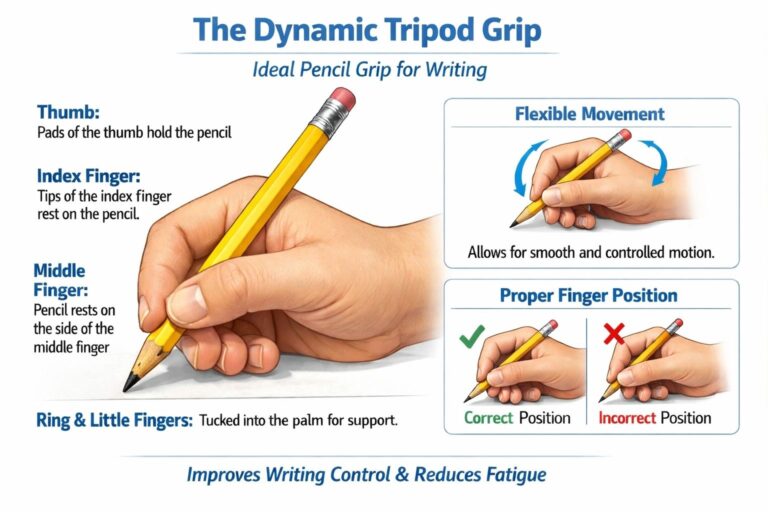
A dynamic tripod grip (thumb, index, middle finger)
Relaxed fingers—not clenched
Pencil resting gently on the middle finger
For younger kids, short pencils or triangular pencils naturally encourage correct grip. Grip trainers can help too, but they should guide—not force—the fingers.
Personal insight:
In our experience working with kids (beginners), correcting grip alone often improves handwriting clarity by nearly 30–40% within weeks.
Tip 2: Fix Posture Before Fixing Letters
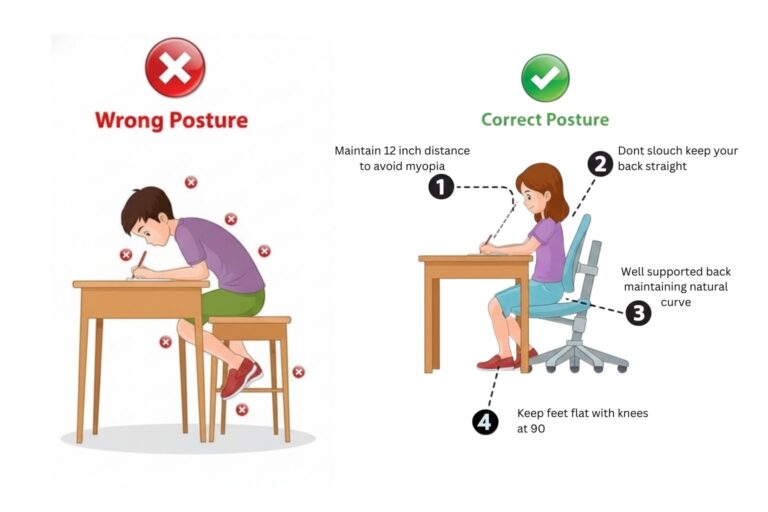
This tip is often overlooked, yet it’s foundational.
Good handwriting posture includes:
Feet flat on the floor
Back straight, not hunched
Writing arm resting comfortably on the table
Paper tilted slightly (especially for right- or left-handed children)
When posture is off, the hand compensates—and handwriting suffers.
If you’re trying to improve handwriting for kids, start observing how they sit, not just what they write.
Tip 3: Build Finger Strength with Simple Daily Activities
Handwriting is fine motor work. Weak fingers struggle to control pencil pressure and movement.
Instead of endless writing drills, try strength-building activities, such as:
Squeezing clay or stress balls
Tearing paper into small pieces
Using tweezers to pick up beads
Buttoning, zipping, or lacing activities
These playful exercises strengthen the same muscles used for writing—without boredom.
Research from Child Development journals consistently shows that fine motor play directly supports handwriting development.
Tip 4: Teach Letters in Groups, Not Alphabetical Order
Here’s a fresh perspective most parents haven’t heard.
Teaching letters A to Z is familiar—but not effective.
Handwriting experts recommend grouping letters by stroke patterns, such as:
c, a, d, g, q (similar curves)
l, t, k, b (straight lines + curves)
m, n, h, r (humps)
This approach:
Builds muscle memory faster
Reduces confusion
Improves consistency
This is a core principle used in scientific handwriting programs, including structured workbook-based courses.
Tip 5: Slow Down the Writing (Speed Comes Later)
Many kids write poorly simply because they’re rushing.
Neat handwriting requires:
Controlled strokes
Conscious letter formation
Consistent spacing
Encourage children to:
Say strokes aloud (“down, curve, lift”)
Trace slowly before writing independently
Focus on shape, not speed
Speed naturally improves once accuracy is mastered.
Tip 6: Use Proper Line Guides and Spacing Tools
Lines are not just boundaries they’re visual anchors.
Beginners benefit greatly from:
Four-line or three-line handwriting sheets
Highlighted baselines
Finger-spacing techniques between words
Why This Works?
The eyes guide the hand. Clear visual structure improves alignment, letter size, and spacing.
You’ll often see immediate improvement when switching from plain paper to structured handwriting sheets.
Tip 7: Practice Little, but Practice Smart
More practice doesn’t always mean better handwriting.
10–15 minutes of focused practice is far more effective than:
One hour of forced writing
Rewriting full pages as punishment
A smart practice session includes:
Warm-up strokes
1–2 focused exercises
Positive feedback
Consistency beats intensity every time.
Tip 8: Strengthen Hand–Eye Coordination
Handwriting is a coordination task, not just hand movement.
Activities that improve hand–eye coordination:
Drawing patterns
Tracing mazes
Copying shapes
Dot-to-dot exercises
According to educational psychology research, children with better hand–eye coordination develop smoother, more legible handwriting.
Tip 9: Avoid Comparing One Child to Another
This is more important than any worksheet.
Handwriting development varies widely. Comparing siblings or classmates can:
Lower confidence
Increase writing anxiety
Create resistance to practice
Instead:
Track personal progress
Celebrate small improvements
Use encouraging language
Confidence plays a huge role in handwriting improvement.
Tip 10: Use a Structured, Expert-Designed Handwriting Program
Random practice gives random results.
If you truly want to improve handwriting for kids, a step-by-step, scientifically designed program makes a massive difference.
A good handwriting program should include:
Stroke-based progression
Muscle memory training
Motor skill development
Age-appropriate exercises
Clear guidance for parents
For example, structured workbook-based courses like the
English Handwriting Improvement Course by The Handwriting Lab
are designed by handwriting experts and used by thousands of students across India.
You can explore the program here:
English Handwriting Improvement Course | 3 Workbook Set
Key Takeaways for Parents & Beginners
Handwriting is a trainable skill, not a talent
Foundations (grip, posture, motor skills) matter more than speed
Grouped letter learning accelerates improvement
Short, focused practice beats long sessions
Structured programs deliver the best results
Final Thoughts: Good Handwriting Builds More Than Neat Notes
When handwriting improves, something deeper happens.
Children become:
More confident in exams
Faster at completing written work
Less anxious about school tasks
And most importantly, they stop seeing writing as a struggle.
If you’ve been searching for realistic, proven ways to improve handwriting for kids, start with these tips—and apply them consistently.
Have you noticed specific handwriting challenges in your child—spacing, letter size, speed, or legibility?
Share your experience in the comments, or explore a scientifically designed handwriting improvement program that guides your child step by step toward neat, confident writing.
Better handwriting isn’t just about marks on paper.
It’s about clarity, confidence, and self-expression—one letter at a time.
FAQs
1. What is the best way to improve handwriting for kids?
The best way to improve handwriting for kids is through a structured combination of correct pencil grip, proper writing posture, and consistent handwriting practice. Children should first learn basic strokes and letter formation before focusing on speed. Activities that strengthen fine motor skills, such as drawing, tracing, and pattern writing, also help improve handwriting control and legibility.
2. At what age should children start learning handwriting properly?
Most children begin developing handwriting skills between 4 and 6 years of age when their fine motor skills are ready. At this stage, they can start learning basic strokes, letter formation, and simple handwriting exercises. However, handwriting improvement can happen at any age if proper training and structured practice methods are used.
3. Why do some kids have poor handwriting?
Poor handwriting in children is usually caused by factors such as weak fine motor skills, incorrect pencil grip, poor posture, lack of handwriting practice, or inadequate hand–eye coordination. In many cases, children were not taught the correct letter formation patterns early on. With the right handwriting training and guided exercises, most handwriting problems can be corrected.
4. How long does it take to improve a child’s handwriting?
The time required to improve handwriting depends on the child’s starting level and consistency of practice. With daily handwriting exercises and structured guidance, noticeable improvement can often be seen within 3 to 4 weeks. Long-term handwriting improvement usually requires regular practice over several weeks or months to develop strong muscle memory.
5. Are handwriting improvement courses helpful for kids?
Yes, structured handwriting improvement courses can be very effective because they follow scientifically designed methods that train letter formation, spacing, stroke control, and writing rhythm. Unlike random practice, a well-designed handwriting program guides children step by step, helping them build proper writing habits and long-term handwriting skills.
Written By - Adidev S
I’m Adidev, a handwriting improvement specialist. My work focuses on helping to develop clear, confident, and legible handwriting through scientifically structured methods that improve motor skills, muscle memory, and hand–eye coordination. Through my experience working with thousands of learners across India, I regularly share practical insights on how to improve handwriting for kids and adults, effective handwriting exercises, and structured handwriting practice methods that help learners build strong handwriting skills step by step.
Recent Post

Can Adults Actually Improve Their Handwriting? (The Science Says Yes)
February 5, 2026 | by Adidev S
Read More →